Cases / Enterprise Simulation · 2019
Aviation Protocol MVP: Lithium Battery Fire in the Cabin
A VR crew-training MVP built with safety experts for the counter-intuitive procedure for portable-device fires, formally adopted by the airline client.
RoleSenior Product Owner / Lead Project Manager, Jasoren
Period2019
DomainAviation safety training
StackVR, Unreal Engine, subject-matter-expert validation
Context
Lithium-ion battery fires (thermal runaway) from passenger electronic devices are among the most critical in-flight emergencies: explosive, toxic and self-sustaining. Airlines cannot practise extinguishing a volatile chemical fire inside a real cabin simulator, yet the correct procedure is counter-intuitive and has to be drilled.
My role
I led the MVP from requirements to acceptance, working in close collaboration with aviation safety subject-matter experts (SMEs).
What I did
- Turned the international checklist logic into an executable drill sequence with the SMEs.
- Thermal assessment: find the source without opening every bin, by reading heat signatures on closed lockers — opening all bins would feed the fire with oxygen.
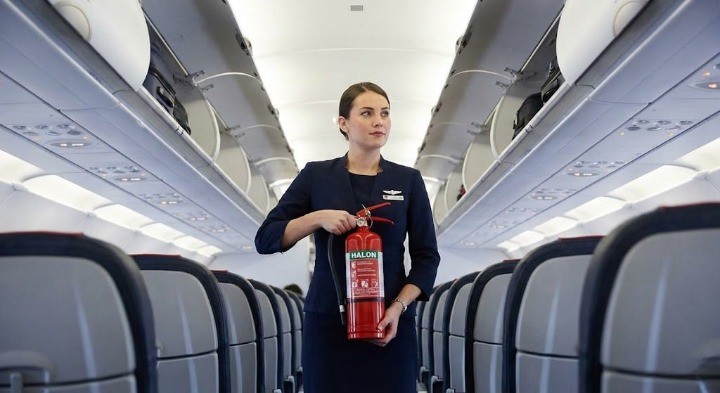
- Initial suppression: apply the Halon extinguisher through a cracked opening.
- Oxygen starvation: close the bin immediately after discharge. This trains crew to resist the instinct to keep looking at the fire.
- Total containment: secure the device with heat-resistant gloves and submerge it in a water container or cooling bag.
- Had the fire behaviour tuned by the safety experts: leaving the bin open too long or handling the device without cooling triggers re-ignition or an explosion event.
Result
- Logic validated by safety specialists for strictly accurate procedural modelling.
- The MVP met all acceptance criteria and was formally adopted by the airline client — proof that VR is viable for high-risk safety training.